
Camera Straps, Photography Gear
Nikon D700 – Review of a Legendary DSLR
Oct
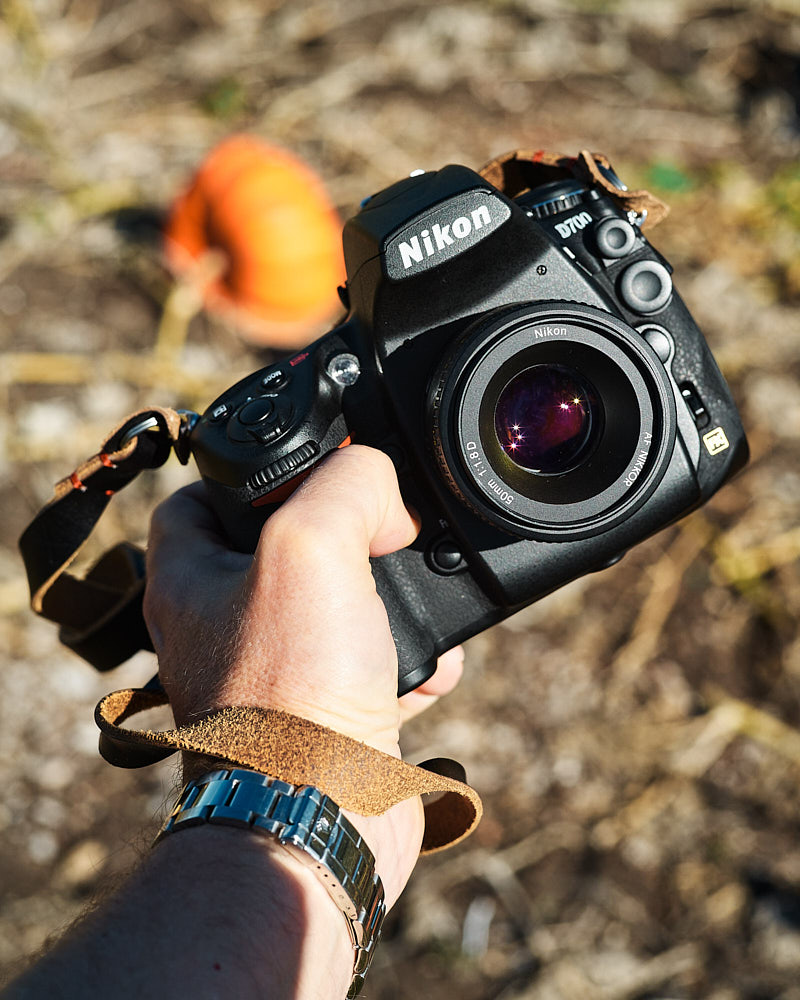
The Nikon D700 – A True Legend
I’ll make something clear, right from the start, the Nikon D700 is my favourite DLSR of all time. And I have used a lot of DSLRs. My first DSLR was a Canon EOS-1D Mark II N, way back in 2005. I sold my Canon EOS 1V in order to afford it. I have owned dozens of DSLRs since then. The Nikon D700 is the one I would choose if I could only have 1 camera.
Needless to say, this is a very biased review, of a camera I have used extensively. I used the Nikon D700 as one of my wedding photography cameras, back in the days when I was a professional wedding photographer. I stopped being a professional photographer in 2016 when we started Hawkesmill. In addition to the Nikon D700, I used the Canon 5D Mark II and Mark III, as my main camera bodies. I didn’t have to keep shooting with the Nikon D700, the Canons were enough. I chose to. Because I loved it so much. I also shot weddings with the Canon 1Ds Mark II. My favourite Canon camera. I used this camera, as my backup, for weddings, until about 2014.
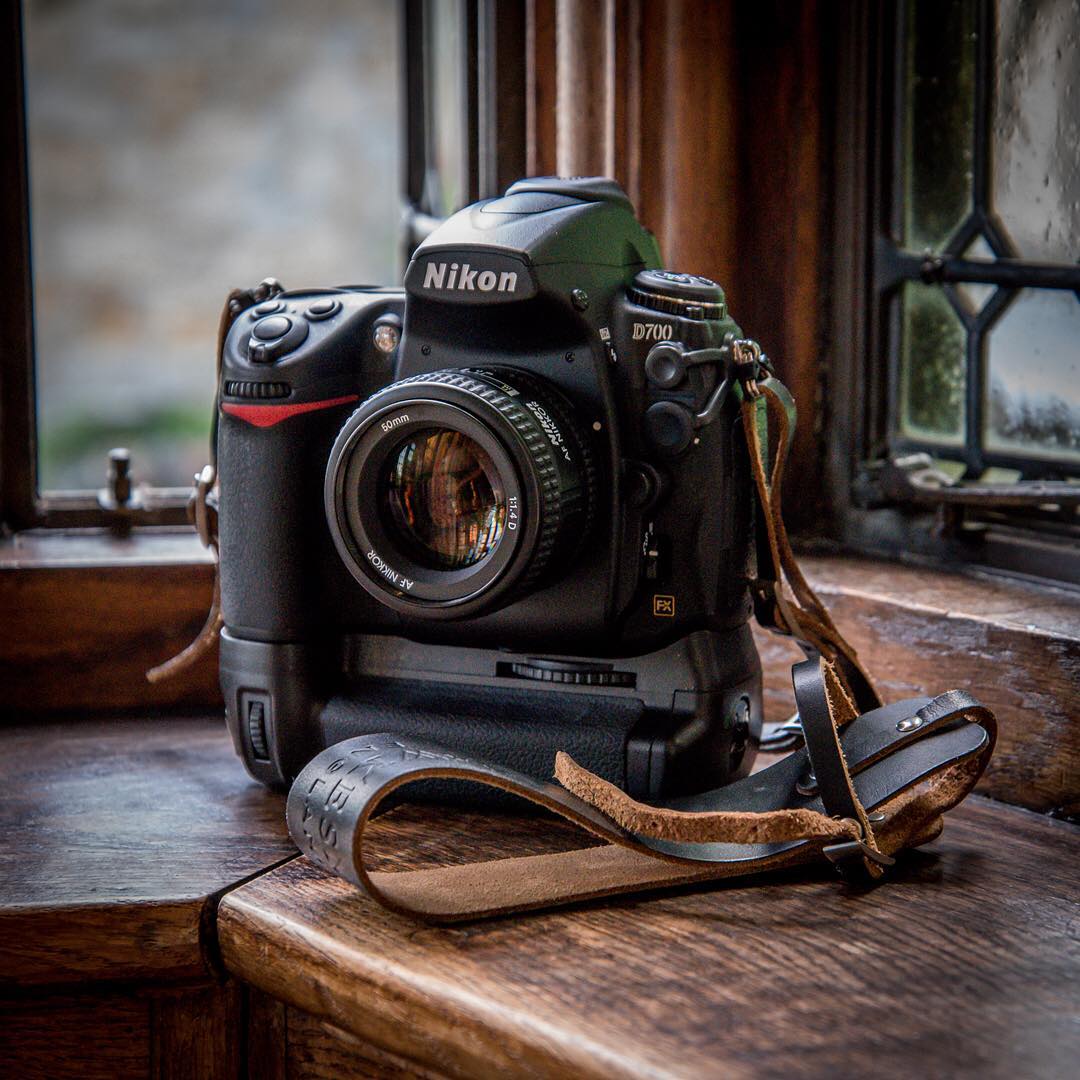
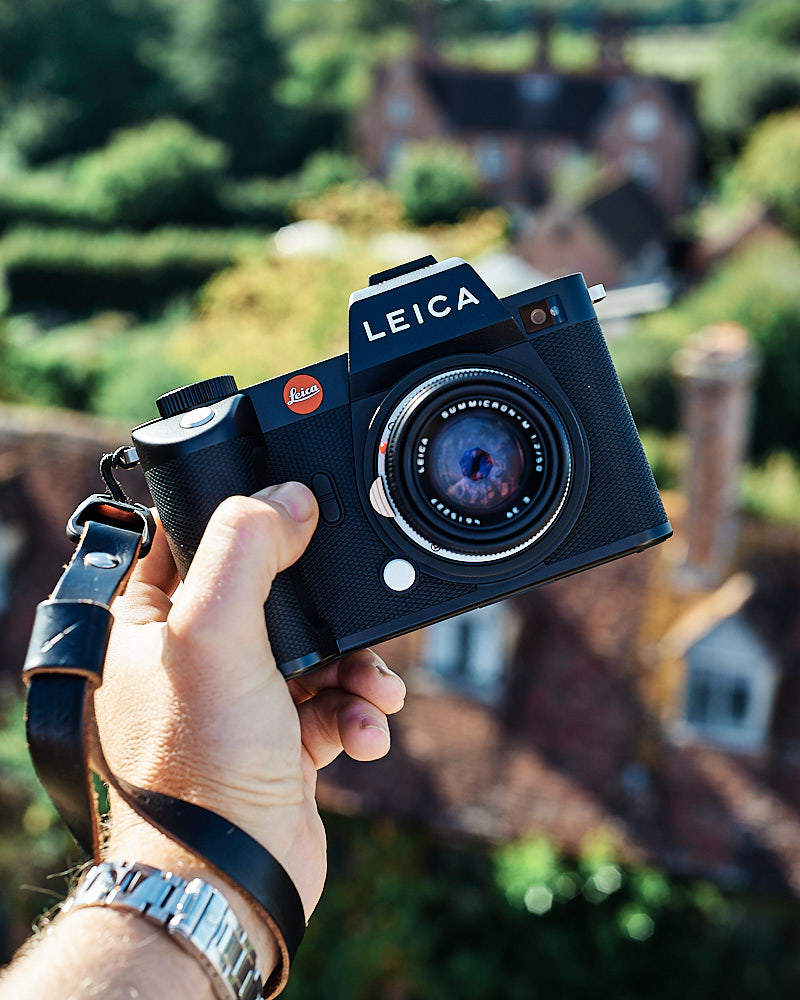
The photo below, of the Nikon D700, was shot with the Canon 5D mark III while I was taking a much needed break, during a wedding I photographed. We then used this later on our social media pages, as we grew our leather camera strap and luxury camera bag brand. When people ask me if Hawkesmill gear has been used by professionals, the answer is YES, including us. We used our own camera straps and camera bags, during all of our professional shoots, whilst we built up our brand. So we know exactly what they can and cannot do, in professional settings.
The Cult of the Nikon D700
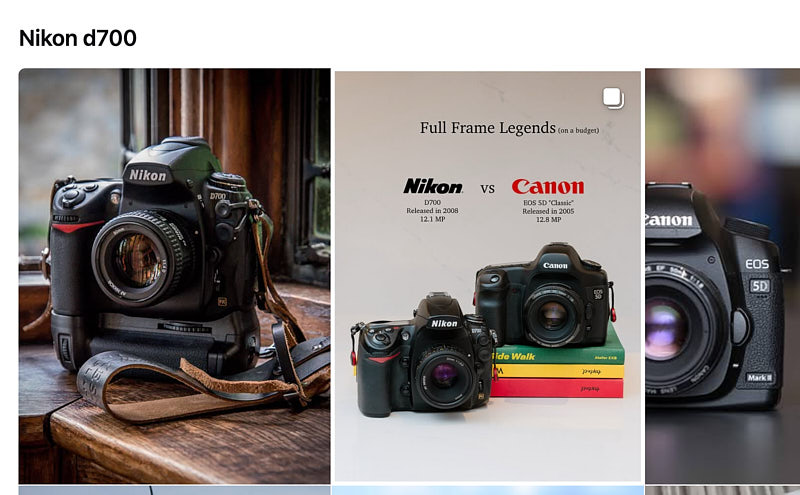
The Nikon D700 has achieved a cult-like status. We have been singing its praises for years. In fact, the photo above, is still the number 1 photo on Instagram, for the keywords Nikon D700. We first posted that image in 2018. Currently, it has had more than 2,000 likes. If anyone else has used Instagram for as long as we have, you know that achieving that many organic likes, with less than 15k followers and without paying for them, is quite a feat. This shows the continuing popularity of the Nikon D700.
In the past few years, it seems like many people on YouTube and social media have caught on to this camera. The amount of Nikon D700 and Canon 5D reviews grows by the minute. The Canon 5D also holds a special place in our hearts. We will most likely do a little review on that camera at some point. Quick tip: for less than £200 used, the 5D is probably the best value camera on the planet right now. It is hard to find them in good shape, so if you do, grab it! You won’t be disappointed.
The general consensus, of almost all of these reviewers, is this; the Nikon D700, although it “only” has 12 megapixels, is a special camera. The sensor is special. The build quality is special. The low light performance is special. I agree, on all fronts. There are many people who would say, “Yes, but you can shoot RAW and create any kind of image you want.” I agree and I disagree. Hold that thought.
I view these early DSLRs as having unique and special sensors. For lack of a better term, more film-like sensors. The grain is pleasing and there is more of it. The colours can be intense, just like Fuji Velvia was intense. Trust me, I know. I shot hundreds of rolls of Velvia in my youth. I started shooting Velvia in 2000. I remember the days when many of us sent our Velvia to Dwayne’s Photo in Parsons, Kansas, via little Fujifilm mailers. Yes, that Dwayne’s Photo, from the movie Kodachrome. I believe you can still do this. And I highly recommend it. If you live in, or are visiting the US, you can use these mailers from B&H Photo. I have 1 mailer left and I plan to use it for my last roll of Fuji Velvia, stored in my freezer since about 2020 and given to me as a Christmas present from my now deceased uncle.
Why write about a camera from 2008?
I have reviewed only a handful of cameras on this site. We make and sell premium leather camera straps and high end camera bags. We are not a review site. And this will not be a technical review. I have no interest in tech specs. In fact, I loathe them. I believe, as photographers, we have enough. We have enough megapixels. We have enough dynamic range. We have enough frames per second. We have enough. In my mind, every single brand could stop making new gear today and we would all be just fine.
If you’re interested in an in-depth review of the Nikon D700 please check out my favourite camera gear YouTuber over at One Month Two Cameras. She also owns a Hawkesmill camera strap. Although, that isn’t why I like her. 😉 She’s a camera nerd, just like me.
My goal, for years, has been to keep old film cameras alive. The more of us who shoot them, the more there will be a market for people to repair them, as well as continue to make parts for them. Film photography has seen an explosion in popularity recently. Which I am glad of. However, it is likely, that at some point, the old film scanners will not work correctly, as they mostly run on older operating systems. Parts are also becoming hard to obtain. Film prices are on a hockey stick curve, up and to the right. Sadly, it is my belief, that film photography will become a luxury that only a few diehards can afford. I don’t want that to happen to DSLRs.
I like buttons. Buttons, buttons, buttons
I like buttons. This is something that I genuinely care more and more about, as I get older and tech creeps more and more into our lives. I like to be able to see an ISO button and to be able to press it, in order to change it. Nikon cameras have a lot of easily accessible buttons. That isn’t to say that Sony, Fuji and Canon don’t. It’s just that Nikon seems to go above and beyond with their buttons. Leica is terrible. I am constantly getting confused with my Leica SL2. I forget which button I have set to do what. Chalk it up to age. I don’t know. But I just like buttons these days.
The Nikon D700 has plenty of buttons for me to poke and prod. I find the placement makes a lot of sense. And I am used to them.
That sensor!
Without a doubt, the best thing about this camera is the Panasonic sensor. I shoot RAW. I’m not a purest. I just like RAW. And despite what manufacturers might say, they design their sensors to look and act a certain way. Shooting RAW does not always mean you are getting a grey, flat image, of exactly what is there.
Sensor manufacturers give a sensor a particular look. That’s why Canon generally leans warm and Nikon leans cool, even in RAW. I know, I know. There isn’t any proof in that claim, but when you’ve shot enough of these cameras, you can pick it out. Just like I can pick out an image made on Kodak Portra versus Fujifilm Pro 400H. Fujifilm is cooler and more green, Kodak is warmer and more red/pink. It’s subjective. But kind of objective in a way too. Just don’t ask me to prove it. I can’t.
The Nikon D700 needs almost no editing. At least, to suit my taste. The images coming out of the camera, even in RAW, are extremely warm and pleasing. But Taylor, you just said Nikon sensors lean more cool. I know. It’s true. But not the D700. The D700 is very warm. Almost as warm as the Canon 5D Classic (which is like shooting and endless roll of Kodak Portra 160). Which, now that I’ve said that, I will have to do a comparison, so you can see what I mean. I’ll do that in due course.
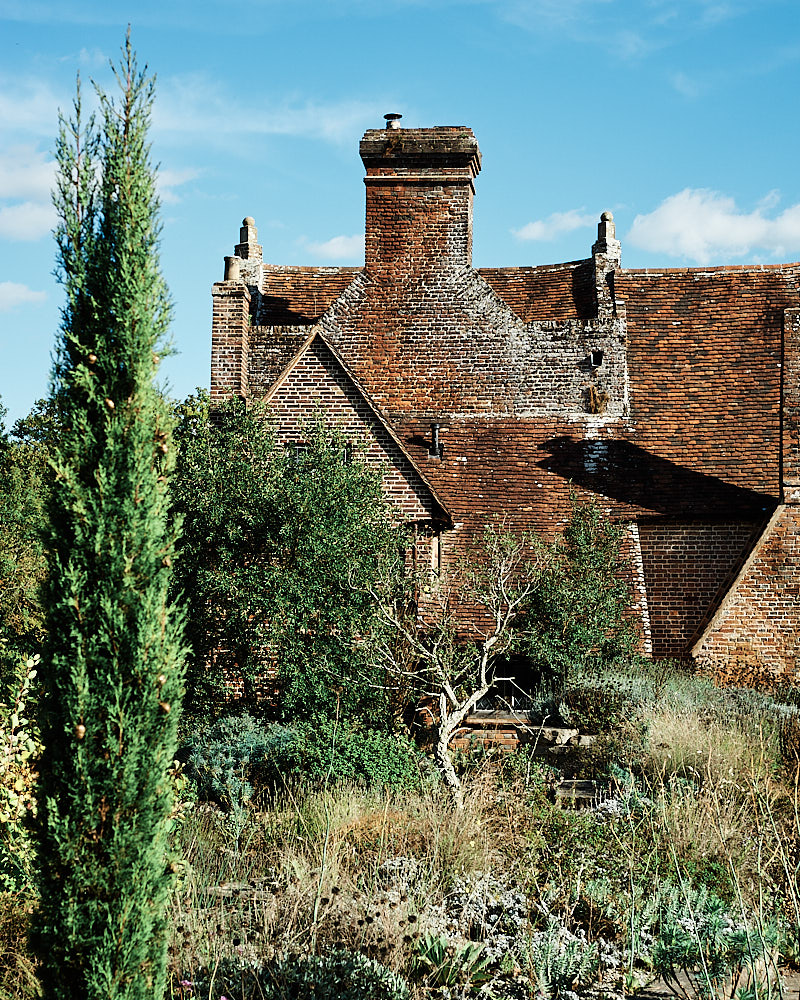
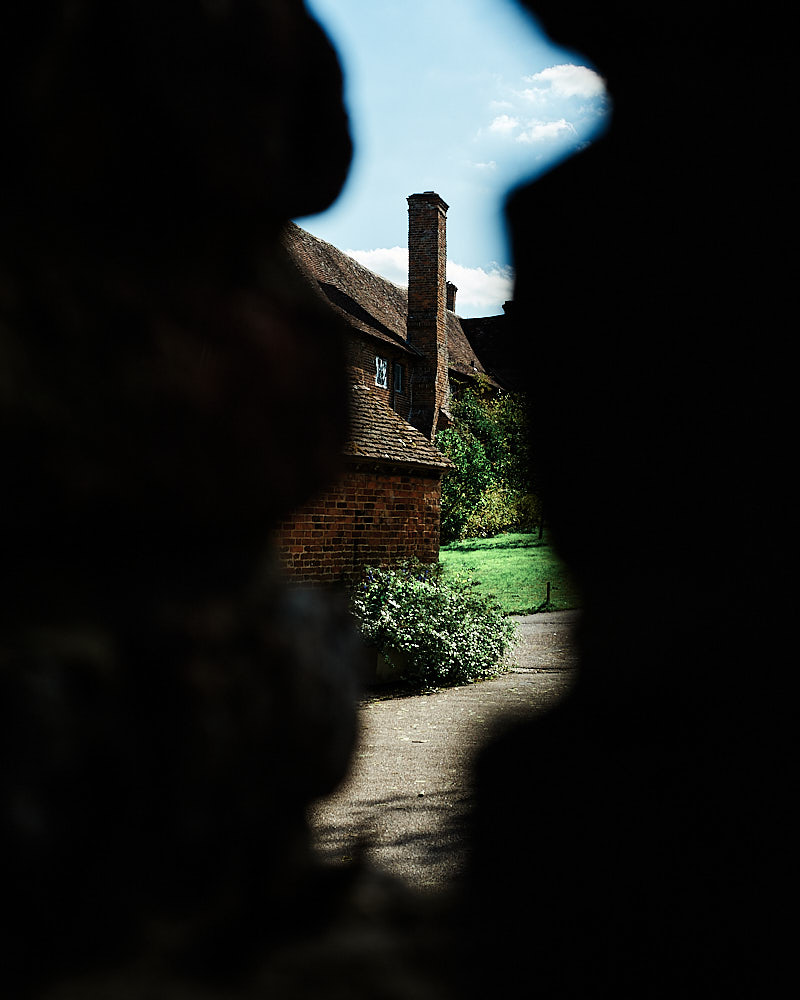


At 12 megapixels, the Nikon D700 isn’t going to win any awards for resolution. Canon launched a 21 megapixel camera, the same year the Nikon D700 was launched. It also had video capability. I sold my D300 (also an amazing camera) in order to buy the 5D Mark II. That camera launched my photography career. I think it launched a lot of careers in both photography and videography. I loved it. But the Nikon sensor is special. It gathers light in a certain way. A way that the Canon cannot match. When I look back on my old 5D Mark II images, many of the highlights are blown out and it is almost too warm for its own good.
The Nikon, on the other hand, hit the sweet spot. It is warm, but not too warm. Highlights are preserved, but don’t look artificial, as can sometimes happen with modern cameras. And anyway, who says every highlight needs to be preserved? Furthermore, the obsession with recovering shadows is, in my opinion, ruining photography, as it is ruining movies. Imagine if the great Orson Welles movie, The Third Man, tried to limit shadows? Shadows are good. Blowing highlights can also be good. We’ve become crazy about technical perfection and less focused on subject matter. In my opinion, of course.


Make DSLRs Great Again
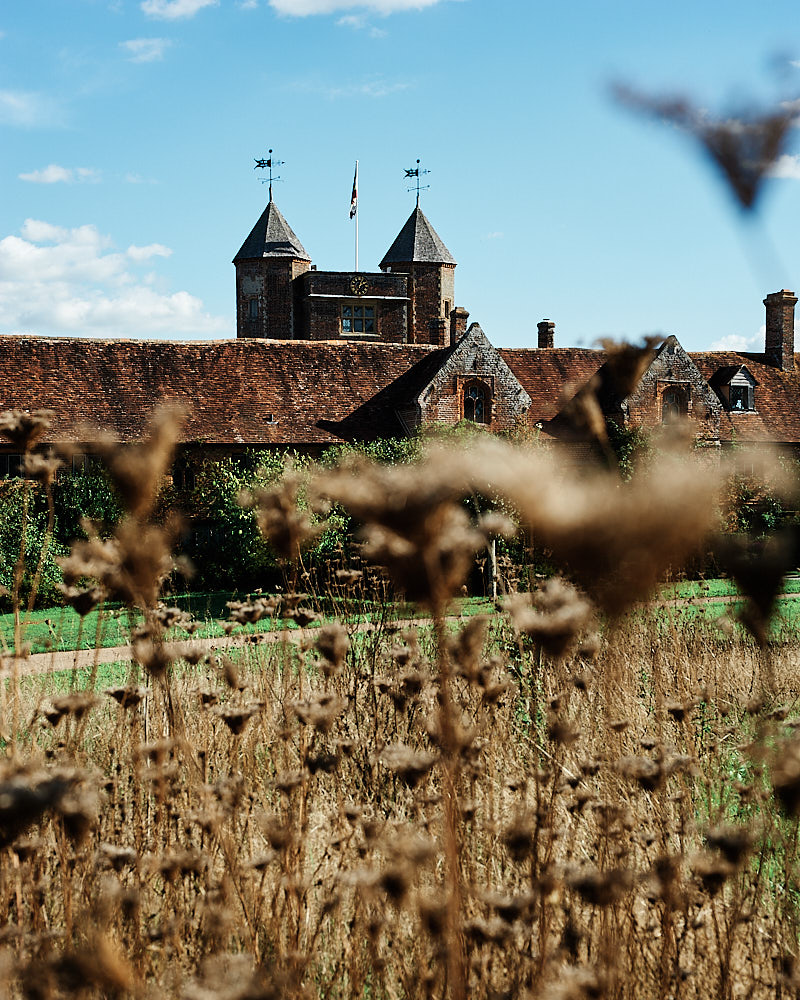
I’m probably going on a bit too much here. These are subjects I’m passionate about. I think we’ve become too obsessed with gear. New gear, to be precise. There are a lot of older cameras out there, which are capable of creating lovely images. Perhaps the few images above, don’t fully convey that. These photos were taken on a family day trip to Sissinghurst Castle, on what is likely to be the last sunny, warm day of 2026. I didn’t intend to create a review from this one trip alone. And I may add some photos down below, as I keep using my D700.
Shooting with older camera gear is a unique and deeply rewarding experience. Whether you shoot a film SLR, film rangefinder, or DSLR, the experience you will get will be unique. Nowadays, most modern digital cameras are quite good. We can all generally obtain the same shots, from camera system to camera system. And so, I challenge you. I challenge you to use an older camera. One where you can’t see the exact exposure through the EVF. By using a camera which makes us remember our exposure triangle and forces us to be in the moment, looking through an OVF, or rangefinder, we’re totally focused (pun intended), on what we’re doing.
Many of us sit on screens for most of the day. Our world, is becoming just a series of screens that we look at. We wake up and check our phones. We get in our cars and look at a screen, which displays our speed. We work on computers. We come home and binge watch a show, on a screen.
Using an older camera, without an EVF, forces us to be present. To see what is actually there, instead of what an computer tells us is there. The fact that the D700 also feels like a tank, has reliable exposure, good dynamic range and RAW colours that are impossible to obtain in modern cameras, without post processing, should be enough of a reason to dust off your old kit.
Remember, we live in a market economy. If we don’t want these old, lovely cameras to disappear, we need to support the economy which surrounds them.
Now get out there and enjoy your old gear. Let’s keep the circular economy going and growing!
Cheers,
Taylor
Co-Founder
Hawkesmill England
Leather camera straps for Nikon
We’re proud to make leather camera straps for almost every model of Nikon camera ever made. Nikon has, what we call, a lug mount system. Meaning, the small lugs on the side of the camera, can easily accept our split rings. We make leather camera straps for the models below and many others. If you have any questions as to whether, or not, your Nikon camera will work with one of our leather camera straps, send us a message and we will be happy to help.
Nikon cameras compatible with our leather camera straps
This is a small list of the most common Nikon cameras that are compatible with our leather camera straps:
EM, FE, FE2, FM, FM2, FM2N, FM3, FM3T, FM3A, F80, F100, F2, F3, F4, F5, F6, Rangefinder S3
D7000, D7100, D7200, D7500, D200, D300, D300s, D500, D600, D610, D700, D750, D800/E, D810/A, D850, D3, D3S, D3X, D4, D4s, D5, D6, Df, Z8, Z9, Zfc, Zf
